
Muscle pain and stiffness can make everyday activities uncomfortable—from sitting at your desk to playing pickleball or enjoying a walk. Dry needling may help some people manage muscle-related pain when it follows a careful assessment and is part of a personalized treatment plan.
A licensed acupuncturist who is also certified in Sports Medicine Acupuncture brings additional training in assessing and treating musculoskeletal problems. This background helps inform treatment decisions based on your symptoms and movement.
What Is Dry Needling?
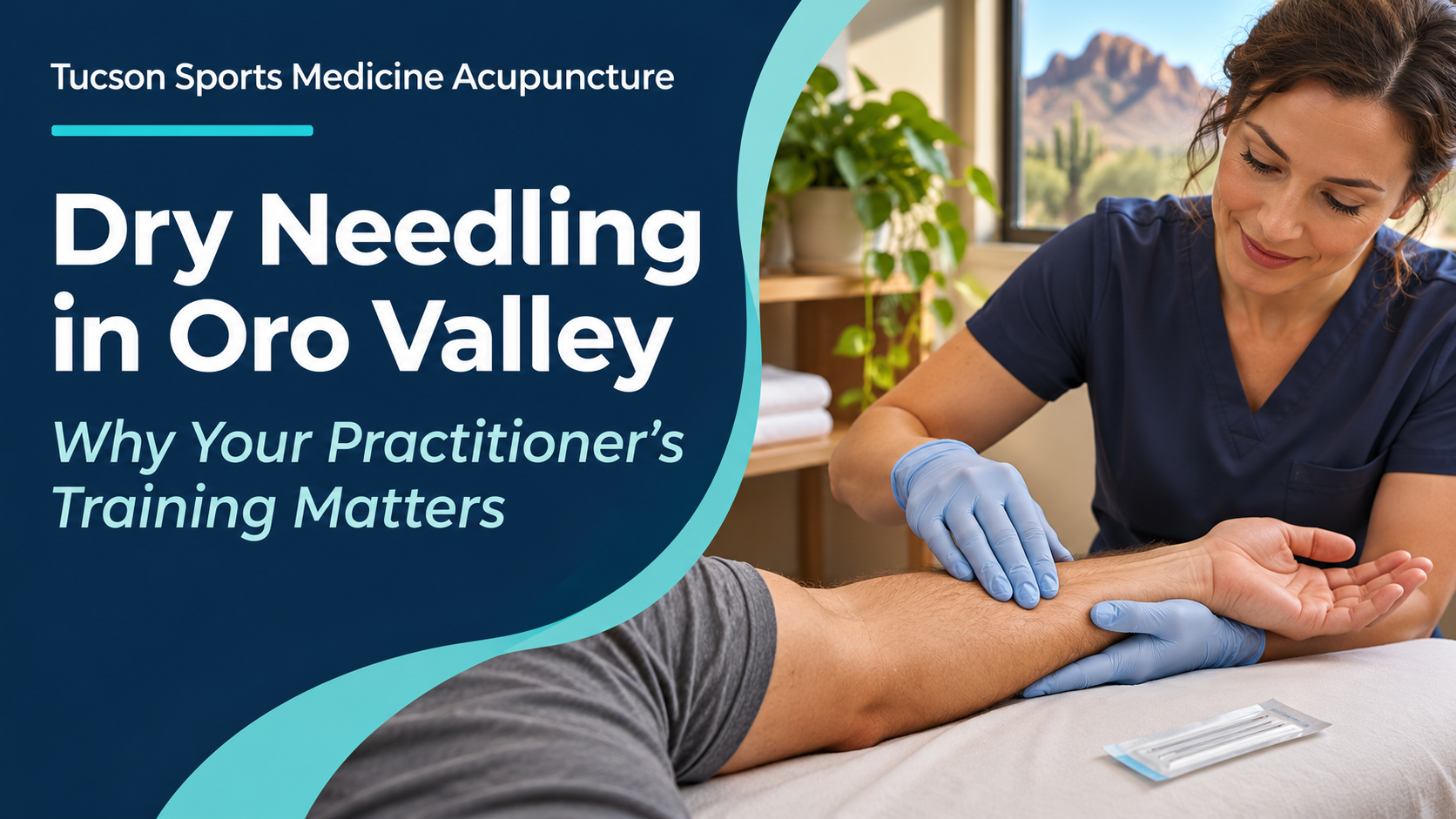
Dry needling uses thin, solid needles to stimulate selected areas of muscle, often including sensitive spots called myofascial trigger points. These areas may contribute to local or referred pain. “Dry” means that no medication is injected.
Dry needling and acupuncture both use thin needles, and some techniques overlap. Their treatment frameworks can differ. Your practitioner should explain the recommended approach and how it relates to your symptoms.
How May Dry Needling Help?
Research suggests that dry needling may provide short-term relief for some musculoskeletal pain conditions. Longer-term benefits are less certain, and individual results vary.
For suitable patients, treatment may help with:
- Muscle pain and tenderness.
- Muscle stiffness.
- Restricted range of motion.
- Discomfort associated with movement.
Needling may be combined with appropriate exercise, activity changes, and other care. The goal is to help you move more comfortably and return to activities that matter to you.
Why Your Practitioner’s Training Matters
Effective care begins with understanding your symptoms. Where does it hurt? Which movements make it worse? Did it begin after an injury, repeated activity, or a change in exercise?
Sports Medicine Acupuncture certification adds focused education in musculoskeletal assessment and treatment to a practitioner’s acupuncture background. The program includes coursework and examinations covering areas such as the neck, shoulder, back, hip, and extremities.
A licensed acupuncturist with this additional training can use that background to:
- Assess the painful area and relevant movement patterns.
- Select appropriate treatment techniques.
- Consider how needling fits into a broader care plan.
- Monitor your response and adjust treatment.
Certification is a useful qualification to consider, but it does not guarantee results. Relevant experience, an active professional license, clear communication, and a thorough assessment also matter.
What to Expect at Your Appointment
Your appointment should begin with a discussion of your symptoms, health history, medications, and goals. An assessment may include checking movement and examining the areas involved.
Before treatment, your practitioner should explain the proposed approach, possible benefits, risks, and alternatives. Tell your practitioner about blood-thinning medications, pregnancy, previous reactions to needles, and other health concerns.
Temporary soreness and bruising can occur. Infection and rare serious complications, including a punctured lung when needling near the chest, are possible. Appropriate anatomical knowledge, training, and sterile technique are essential.
Personalized Care in Oro Valley
At Tucson Sports Medicine Acupuncture, a division of Bluemoon Acupuncture & Wellness Center, Dr. Mojgan Rezaei, DACM, L.Ac., C.SMA., provides individualized care for people seeking help with pain and movement concerns.
Whether you are an athlete, an active retiree, or someone whose daily activities have become uncomfortable, an assessment can help determine whether a needling-based treatment approach is appropriate for you.
Call 520-288-8145 to schedule an assessment.
Further Reading
Cleveland Clinic: Dry Needling
Research Review: Dry Needling for Musculoskeletal Pain
Sports Medicine Acupuncture Certification Program
This article provides general education. Treatment recommendations depend on an individual assessment.

About Author Tucson Sports Medicine Acupuncture
Tucson Sports Medicine Acupuncture is a division of Bluemoon Acupuncture & Wellness Center in Oro Valley, Arizona. Our clinic shares patient education about acupuncture, sports injuries, pain, and movement. Clinical care is provided by Dr. Mojgan Rezaei, DACM, L.Ac., C.SMA. Learn about her training and credentials: https://tucsonsportsmedicineacupuncture.com/about-us/
November 8, 2026